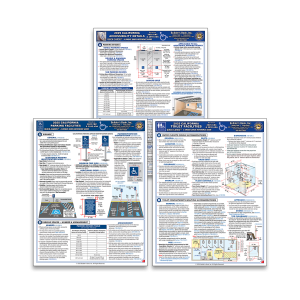

2026 CARM California Accessibility Reference Manual 9th Edition Based On 2025 CBC with Free PDF
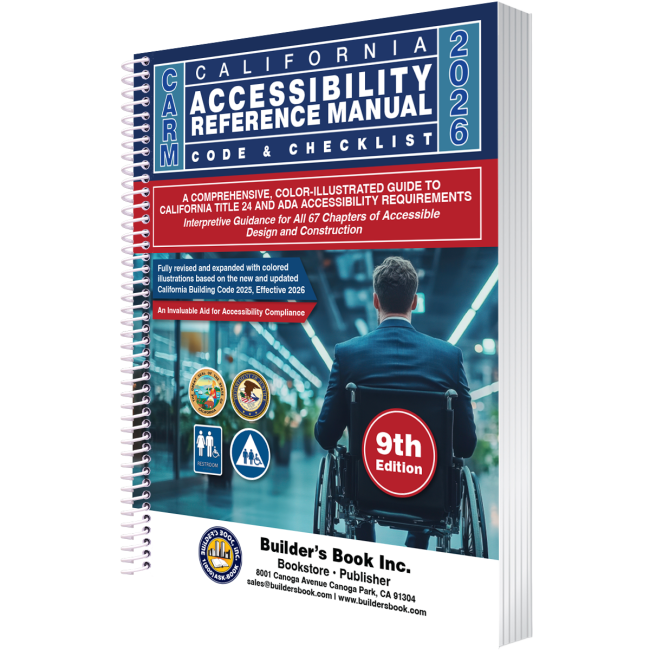
2026 California Accessibility Reference Manual (CARM), 9th Edition, based on the 2025 California Building Code
Embark on a comprehensive journey through accessibility compliance with the California Accessibility Reference Manual (CARM), based on 2025 CBC. This essential resource is designed for professionals navigating the detailed requirements of the California Building Code (CBC, 2025 – effective January 1, 2026) and the 2010 Americans with Disabilities Act (ADA) Standards for Accessible Design.
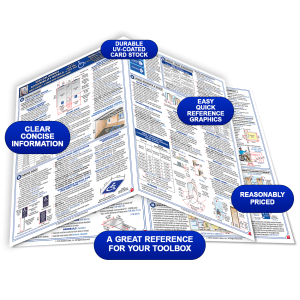
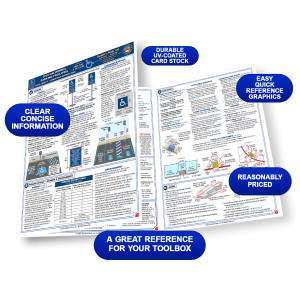
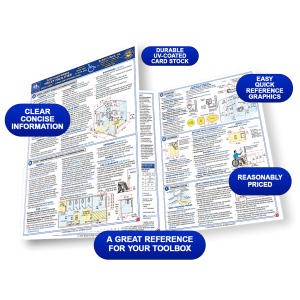
Renowned for its clarity and practicality, the CARM combines authoritative code requirements with clear illustrations and an intuitive, user-friendly layout. It is specifically developed to help users understand, interpret, and correctly apply both California and federal accessibility standards across a wide range of building types and occupancies.
This edition serves as a trusted companion for architects, designers, builders, inspectors, and accessibility advocates—guiding users through key provisions, explaining scoping and technical criteria, and supporting real-world compliance throughout the design, permitting, and construction process.
Key Features
Comprehensive Accessibility Guidance
The CARM is a thorough reference that presents, explains, and illustrates accessibility requirements drawn directly from the California Building Code and the ADA Standards for Accessible Design.
Clear Format with Practical Illustrations
Designed for ease of use, the manual features a clean, organized layout supported by detailed illustrations, enabling users to quickly grasp complex technical requirements and apply them accurately in the field.
Alignment with State and Federal Standards
By integrating CBC accessibility provisions with ADA requirements, the CARM functions as a single, consolidated resource, helping users understand how California regulations align with—and sometimes exceed—federal accessibility standards.
Topics Covered
The CARM provides extensive coverage of accessibility requirements, including but not limited to:
Accessible Routes and Entrances
Accessible Means of Egress
Elevators, Lifts, and Vertical Access
Stairways, Handrails, Ramps, and Guards
Employee Work Areas and Assembly Spaces
Medical Care, Long-Term Care, and Residential Facilities
Outdoor Developed and Recreational Areas
Parking, Passenger Loading Zones, and EV Charging Stations
Signs, Identification, and Assistive Listening Systems
Plumbing Fixtures and Toilet Facilities
Electrical Switches, Receptacles, and Reach Ranges
Existing and Historical Buildings
How to Use the Manual
Organized Section Navigation
The manual is divided into clearly labeled sections, allowing users to quickly locate specific topics and efficiently research applicable accessibility requirements.
Visual Interpretation Through Illustrations
Illustrative examples clarify dimensional criteria, spatial relationships, and installation requirements, making complex provisions easier to understand and apply.
Compliance Support
The CARM may be used as a project compliance reference, helping professionals verify accessibility requirements during design development, plan review, and construction.
Project Planning Integration
By incorporating the CARM early in the planning process, accessibility considerations become an integral part of design and construction, reducing costly revisions and compliance issues.
Who Can Benefit
Architects and Designers
Architects and designers can rely on the CARM to ensure their projects comply with both California and federal accessibility standards from concept through construction documents.
Builders and Contractors
For builders and contractors, the CARM serves as a practical field reference to support accurate installation and verification of accessibility features.
Accessibility Advocates and Inspectors
Accessibility professionals and advocates can use the manual to strengthen their understanding of applicable regulations and support inclusive, code-compliant environments.
Conclusion
The California Accessibility Reference Manual (CARM), updated for the 2025 CBC, remains an indispensable guide for navigating the complex landscape of accessibility regulations. By bridging the California Building Code and the Americans with Disabilities Act, the CARM provides clarity, consistency, and confidence for professionals committed to accessible design and construction.
Whether shaping new buildings, renovating existing facilities, or advocating for inclusive spaces, the CARM empowers users with the knowledge and tools needed to help create a more accessible, equitable, and inclusive built environment for all.
Contents
Section 1 Application & Administration
Section 2 Scoping Requirements – Application
Section 3 Accessible Routes – Scoping
Section 4 Accessible Routes
Section 5 Accessible Entrances
Section 6 Accessible Means of Egress
Section 7 Exit Signs for Means of Egress
Section 8 Access to Public Buildings
Section 9 Floor & Ground Surfaces
Section 10 Doors, Doorways & Gates
Section 11 Elevators
Section 12 Limited Use/Limited Application (LULA) Elevators
Section 13 Destination-Oriented Elevators
Section 14 Platform Lifts
Section 15 Stairways
Section 16 Handrails
Section 17 Guards
Section 18 Ramps
Section 19 Clear Floor or Ground Space for Wheelchairs
Section 20 Employee Work Areas
Section 21 Assembly Areas
Section 22 Religious Facilities
Section 23 Judicial Facilities
Section 24 Medical Care & Long-Term Care Facilities
Section 25 Transient Lodging Guest Rooms
Section 26 Dressing, Fitting & Locker Rooms
Section 27 Storage
Section 28 Recreational Facilities
Section 28A Amusement Rides
Section 28B Boating and Fishing Facilities
Section 28C Golf and Miniature Golf Facilities
Section 28D Play Areas
Section 28E Saunas, Pools, and Spas
Section 28F Areas of Sport Activity
Section 28G Shooting Facilities
Section 29 Outdoor Developed Areas
Section 30 Site Impracticality Tests
Section 31 Signs & Identification
Section 32 Assistive Listening Devices
Section 33 Fire & Carbon Monoxide Alarm Systems
Section 34 Parking
Section 35 Passenger Drop-Off & Loading Zones
Section 36 Electric Vehicle Charging Stations (EVCS)
Section 37 Curb Ramps, Blended Transitions & Islands
Section 38 Detectable Warnings & Detectable Directional Texture
Section 39 Transportation Facilities
Section 40 Reach Ranges & Operable Parts
Section 41 Electric Switches and Outlets
Section 42 Dining & Work Surfaces
Section 43 Sales & Service Counters
Section 44 ATMs, Fare Machines & Point-of-Sale Devices
Section 45 Depository & Dispensing Machines
Section 46 Telephones
Section 47 Drinking Fountains
Section 48 Water Closets & Toilet Compartments
Section 49 Toilet & Bathing Facilities
Section 50 Toilet & Bathing Rooms (Single Accommodations)
Section 51 Ambulatory Toilet Compartments
Section 52 Urinals
Section 53 Water Closets & Toilet Compartments for Children’s Use
Section 54 Grab Bars
Section 55 Plumbing Fixtures & Accessories
Section 56 Lavatories & Sinks
Section 57 Bathtubs
Section 58 Showers
Section 59 Seats
Section 60 Residential Dwelling Units
Section 61 Dwelling Unit Features
Section 62 Residential Electrical Receptacle & Switch Heights
Section 63 Kitchens, Kitchenettes & Wet Bars
Section 64 Washing Machines & Clothes Dryers
Section 65 Private Residence Elevators
Section 66 Existing Buildings & Facilities
Section 67 Historical Buildings
| Price | $89.95 |
|---|---|
| Customer Service | We're Here To Help! Call us anytime during our customer service hours... Monday through Friday - 8:30 am to 4:30 pm (Pacific) Order Questions:
TOLL FREE, 800-273-7375 (Outside the U.S. call 818-887-7828). Our Address: 8001 Canoga Avenue Canoga Park, CA 91304 US Phone: 800-275-2665 E-mail: sales@buildersbook.com
|
| Description | 2026 California Accessibility Reference Manual (CARM), 9th Edition, based on the 2025 California Building Code Embark on a comprehensive journey through accessibility compliance with the California Accessibility Reference Manual (CARM), based on 2025 CBC. This essential resource is designed for professionals navigating the detailed requirements of the California Building Code (CBC, 2025 – effective January 1, 2026) and the 2010 Americans with Disabilities Act (ADA) Standards for Accessible Design. Renowned for its clarity and practicality, the CARM combines authoritative code requirements with clear illustrations and an intuitive, user-friendly layout. It is specifically developed to help users understand, interpret, and correctly apply both California and federal accessibility standards across a wide range of building types and occupancies. This edition serves as a trusted companion for architects, designers, builders, inspectors, and accessibility advocates—guiding users through key provisions, explaining scoping and technical criteria, and supporting real-world compliance throughout the design, permitting, and construction process. Key Features Comprehensive Accessibility Guidance The CARM is a thorough reference that presents, explains, and illustrates accessibility requirements drawn directly from the California Building Code and the ADA Standards for Accessible Design. Clear Format with Practical Illustrations Designed for ease of use, the manual features a clean, organized layout supported by detailed illustrations, enabling users to quickly grasp complex technical requirements and apply them accurately in the field. Alignment with State and Federal Standards By integrating CBC accessibility provisions with ADA requirements, the CARM functions as a single, consolidated resource, helping users understand how California regulations align with—and sometimes exceed—federal accessibility standards. Topics Covered The CARM provides extensive coverage of accessibility requirements, including but not limited to: Accessible Routes and Entrances Accessible Means of Egress Elevators, Lifts, and Vertical Access Stairways, Handrails, Ramps, and Guards Employee Work Areas and Assembly Spaces Medical Care, Long-Term Care, and Residential Facilities Outdoor Developed and Recreational Areas Parking, Passenger Loading Zones, and EV Charging Stations Signs, Identification, and Assistive Listening Systems Plumbing Fixtures and Toilet Facilities Electrical Switches, Receptacles, and Reach Ranges Existing and Historical Buildings How to Use the Manual Organized Section Navigation The manual is divided into clearly labeled sections, allowing users to quickly locate specific topics and efficiently research applicable accessibility requirements. Visual Interpretation Through Illustrations Illustrative examples clarify dimensional criteria, spatial relationships, and installation requirements, making complex provisions easier to understand and apply. Compliance Support The CARM may be used as a project compliance reference, helping professionals verify accessibility requirements during design development, plan review, and construction. Project Planning Integration By incorporating the CARM early in the planning process, accessibility considerations become an integral part of design and construction, reducing costly revisions and compliance issues. Who Can Benefit Architects and Designers Architects and designers can rely on the CARM to ensure their projects comply with both California and federal accessibility standards from concept through construction documents. Builders and Contractors For builders and contractors, the CARM serves as a practical field reference to support accurate installation and verification of accessibility features. Accessibility Advocates and Inspectors Accessibility professionals and advocates can use the manual to strengthen their understanding of applicable regulations and support inclusive, code-compliant environments. Conclusion The California Accessibility Reference Manual (CARM), updated for the 2025 CBC, remains an indispensable guide for navigating the complex landscape of accessibility regulations. By bridging the California Building Code and the Americans with Disabilities Act, the CARM provides clarity, consistency, and confidence for professionals committed to accessible design and construction. Whether shaping new buildings, renovating existing facilities, or advocating for inclusive spaces, the CARM empowers users with the knowledge and tools needed to help create a more accessible, equitable, and inclusive built environment for all. Contents Section 1 Application & Administration
|