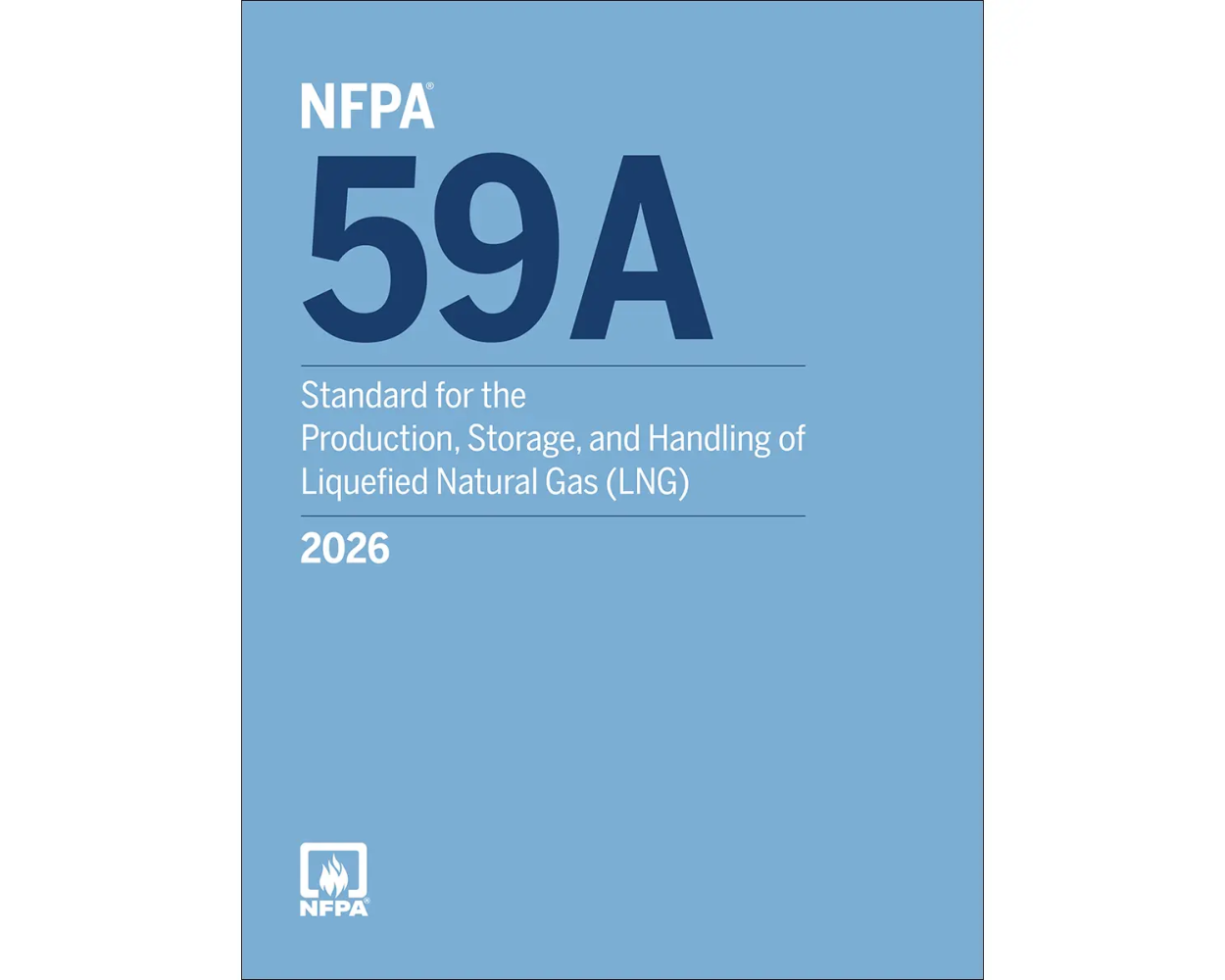
NFPA 59A, Standard for the Production, Storage, and Handling of Liquefied Natural Gas (LNG)
Help Identify Risks and Ensure the Safe Production, Storage, and Handling of LNG.
Used by the Department of Transportation (DOT) and referenced by other agencies, including the Federal Energy Regulatory Commission, NFPA 59A, Standard for the Production, Storage, and Handling of Liquefied Natural Gas (LNG), governs the site selection, design, construction, and fire protection of LNG plants and export facilities.
NFPA 59A is used throughout the United States and internationally trusted as the final word on safety for these specialized facilities.
The prevalence of LNG in the United States has caused a shift away from importing LNG towards becoming a large exporter. Numerous export facilities under development rely on NFPA 59A for guidance on LNG production, storage, and handling. Along with prescriptive requirements, this NFPA® publication includes a performance-based option that requires analyzing the risks to persons and property in the area surrounding the proposed LNG plant based on risk mitigation techniques incorporated into the facility design.
NFPA 59A, 2026 edition, features several notable changes to the standard, including:
- Expanded electrical area classification requirements to include common process areas and additional figures
- Added requirements for cybersecurity plans and procedures to address cybersecurity threats and vulnerabilities in LNG facilities
- Inclusion of annex material in relation to fire protection water and its associated design criteria
- Revised and reorganized impounding and spill containment requirements to better address which design criteria different areas of the LNG facility must comply with
- Updated scope of the standard to clarify that it does apply to renewable natural gas (RNG) facilities when in a liquefied form
- Added management of change requirements to account for the introduction of hydrogen blending in some systems, in addition to standard management of change concerns
NFPA® 59A Standard for the Production, Storage, and Handling of Liquefied Natural Gas (LNG) 2026 Edition
Chapter 1 Administration1.1 Scope.
1.2 Purpose.
1.3 Retroactivity.
1.4 Equivalency.
1.5 SI Units.
1.6 Pressure Measurement.
1.7 Referenced Standards.
Chapter 2 Referenced Publications2.1 General.
2.2 NFPA Publications.
2.3 Other Publications.
2.4 References for Extracts in Mandatory Sections.
Chapter 3 Definitions3.1 General.
3.2 NFPA Official Definitions.
3.3 General Definitions.
Chapter 4 General Requirements4.1 Scope.
4.2 Designer and Fabricator Competence.
4.3 Soil Protection for Cryogenic Equipment.
4.4 Falling Ice and Snow.
4.5 Concrete Design and Materials.
4.6 Management of Changes.
4.7 Control Center.
4.8 Sources of Power.
4.9 Records.
4.10 Noncombustible Material.
4.11 Ignition Source Control.
4.12 Facility Lighting.
Chapter 5 Plant Siting5.1 Scope.
5.2 Plant Site Provisions.
5.3 Site Provisions for Spill and Leak Control.
Chapter 6 Plant Layout6.1 Scope.
6.2 General Layout.
6.3 Container Spacing.
6.4 Vaporizer Spacing.
6.5 Process Equipment Spacing.
6.6 Loading and Unloading Facility Spacing.
6.7 Buildings and Structures.
6.8 Impoundment Spacing.
Chapter 7 Process Equipment7.1 Scope.
7.2 General Requirement.
7.3 Installation of Process Equipment.
7.4 Pumps and Compressors.
7.5 Hazardous Liquid Storage.
7.6 Process Equipment.
Chapter 8 Stationary LNG Storage8.1 Scope.
8.2 General.
8.3 Design Considerations.
8.4 Tank Systems.
8.5 ASME Containers.
Chapter 9 Vaporization Facilities9.1 Scope.
9.2 Classification of Vaporizers.
9.3 Design and Materials of Construction.
9.4 Vaporizer Shutoff Valves.
9.5 Relief Devices on Vaporizers.
9.6 Combustion Air Supply.
9.7 Products of Combustion.
Chapter 10 Piping Systems and Components10.1 Scope.
10.2 General.
10.3 Materials of Construction.
10.4 Installation.
10.5 Isolation of Hazardous Fluid Equipment and Systems.
10.6 Pipe Supports.
10.7 Piping System and Component Identification.
10.8 Inspection, Examination, and Testing of Piping.
10.9 Purging of Piping Systems.
10.10 Safety and Relief Valves.
10.11 Flares and Vent Stacks.
10.12 Corrosion Control.
10.13 Cryogenic Pipe-in-Pipe Systems.
10.14 Below-Ground or Subsea Installation.
Chapter 11 Instrumentation and Electrical Services11.1 Scope.
11.2 General.
11.3 Liquid Level Gauging.
11.4 Pressure Gauging.
11.5 Vacuum Gauging.
11.6 Temperature Indicators.
11.7 Control Systems.
11.8 Fail-Safe Design.
11.9 Electrical Equipment.
11.10 Electrical Grounding and Bonding.
Chapter 12 Plant Facilities Design12.1 Design Classification.
12.2 Plant Facilities Design.
12.3 Seismic Design.
12.4 LNG Containers.
12.5 Buildings or Structural Enclosures.
12.6 Fire and Explosion Control.
12.7 Ventilation.
12.8 Flammable Gas or Vapor Control.
12.9 Occupant Protection.
Chapter 13 Impounding Area and Drainage System Design and Capacity13.1 Single Container Impounding Areas.
13.2 Multiple Container Impounding Areas.
13.3 Dikes, Impounding Walls, and Drainage Channels for Non-LNG Storage.
13.4 Other Impounding Areas.
13.5 Volumetric Capacity.
13.6 Enclosed Drainage Channels.
13.7 Enclosed Impounding Systems.
13.8 Dikes and Impounding Walls.
13.9 Secondary Containment.
13.10 Pipe Penetrations.
13.11 Insulation Systems.
13.12 Impounding Area Wall Height and Distance to Containers.
13.13 Water Removal for Hazardous Liquid Impounding Areas.
Chapter 14 Mobile and Temporary LNG Facility14.1 Temporary Service Use.
14.2 Odorization Equipment.
Chapter 15 Transfer Systems for Hazardous Fluids15.1 Scope.
15.2 General Requirements.
15.3 Piping System.
15.4 Pump and Compressor Control.
15.5 Marine Shipping and Receiving.
15.6 Tank Vehicle, Tank Car, and ISO Container Loading and Unloading Facilities.
15.7 Pipeline Shipping and Receiving.
15.8 Hoses and Arms.
15.9 Communications and Lighting.
Chapter 16 Fire Protection, Safety, and Security16.1 Scope.
16.2 General.
16.3 ESD Systems.
16.4 Hazard Detection.
16.5 Fire Protection Water Systems.
16.6 Fire Extinguishing and Other Fire Control Equipment.
16.7 Personnel Safety.
16.8 Security.
Chapter 17 Requirements for Stationary Applications for Small Scale LNG Facilities17.1 Scope.
17.2 Control Rooms.
17.3 Plant Siting.
17.4 Plant Layout.
17.5 Process Equipment.
17.6 Stationary LNG Storage.
17.7 Vaporization Facilities.
17.8 Piping Systems and Components.
17.9 Instrumentation and Electrical Services.
17.10 Plant Facilities Design.
17.11 Impounding Area and Drainage System Design Capacity.
17.12 Transfer Systems for Hazardous Fluids.
17.13 Fire Protection, Safety, and Security.
17.14 Operating, Maintenance, and Personnel Training.
Chapter 18 Operating, Maintenance, and Personnel Training18.1 Scope.
18.2 General Requirements.
18.3 Manual of Operating Procedures.
18.4 Emergency Procedures.
18.5 Incident Investigation Protocol.
18.6 Security Procedures.
18.7 Monitoring Operations.
18.8 Commissioning.
18.9 Transfer of LNG and Flammables.
18.10 Maintenance Manual.
18.11 Maintenance.
18.12 Personnel Training.
18.13 Records.
Chapter 19 Performance-Based LNG Plant Siting Using Quantitative Risk Analysis (QRA)19.1 Scope.
19.2 General Requirements.
19.3 Definitions.
19.4 Risk Calculations and Basis of Assessment.
19.5 LNG and Other Hazardous Materials Release Scenarios.
19.6 Release Probabilities and Conditional Probabilities.
19.7 Modeling Conditions and Occurrence Probabilities.
19.8 Hazard and Consequence Assessment.
19.9 Risk Result Presentation.
19.10 Risk Tolerability Criteria.
19.11 Risk Mitigation Approaches.
Annex A Explanatory Material
Annex B Seismic Design of LNG Plants
Annex C Informational References
2026 (9781455932481)
2023 (9781455929696)
2019 (9781455921973)
2016 (9781455913008)
2013 (NFPA59A-13)
| Price | $219.95 |
|---|---|
| Customer Service | We're Here To Help!
Call us anytime during our customer service hours... Monday through Friday - 8:30 am to 4:30 pm (Pacific) Order Questions:
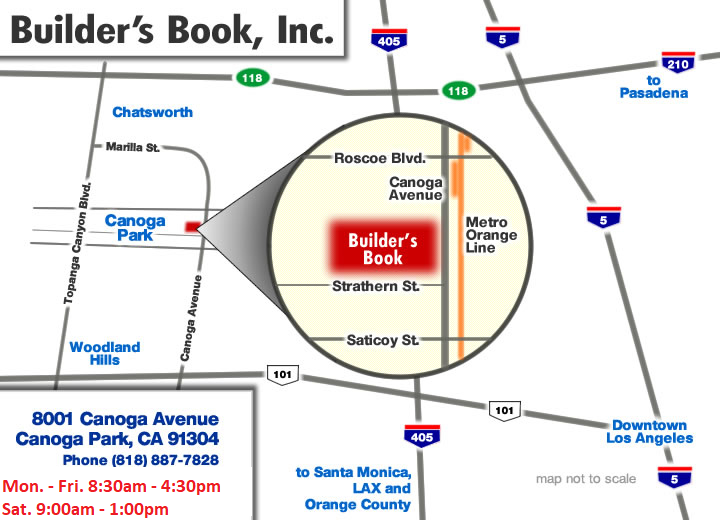
TOLL FREE, 800-273-7375 (Outside the U.S. call 818-887-7828). Our Address: 8001 Canoga Avenue Canoga Park, CA 91304 US Phone: 800-275-2665 E-mail: sales@buildersbook.com
|
| Description | Help Identify Risks and Ensure the Safe Production, Storage, and Handling of LNG. Used by the Department of Transportation (DOT) and referenced by other agencies, including the Federal Energy Regulatory Commission, NFPA 59A, Standard for the Production, Storage, and Handling of Liquefied Natural Gas (LNG), governs the site selection, design, construction, and fire protection of LNG plants and export facilities. NFPA 59A is used throughout the United States and internationally trusted as the final word on safety for these specialized facilities. The prevalence of LNG in the United States has caused a shift away from importing LNG towards becoming a large exporter. Numerous export facilities under development rely on NFPA 59A for guidance on LNG production, storage, and handling. Along with prescriptive requirements, this NFPA® publication includes a performance-based option that requires analyzing the risks to persons and property in the area surrounding the proposed LNG plant based on risk mitigation techniques incorporated into the facility design. NFPA 59A, 2026 edition, features several notable changes to the standard, including:
NFPA® 59A Standard for the Production, Storage, and Handling of Liquefied Natural Gas (LNG) 2026 Edition Chapter 1 Administration1.1 Scope. Chapter 2 Referenced Publications2.1 General. Chapter 3 Definitions3.1 General. Chapter 4 General Requirements4.1 Scope. Chapter 5 Plant Siting5.1 Scope. Chapter 6 Plant Layout6.1 Scope. Chapter 7 Process Equipment7.1 Scope. Chapter 8 Stationary LNG Storage8.1 Scope. Chapter 9 Vaporization Facilities9.1 Scope. Chapter 10 Piping Systems and Components10.1 Scope. Chapter 11 Instrumentation and Electrical Services11.1 Scope. Chapter 12 Plant Facilities Design12.1 Design Classification. Chapter 13 Impounding Area and Drainage System Design and Capacity13.1 Single Container Impounding Areas. Chapter 14 Mobile and Temporary LNG Facility14.1 Temporary Service Use. Chapter 15 Transfer Systems for Hazardous Fluids15.1 Scope. Chapter 16 Fire Protection, Safety, and Security16.1 Scope. Chapter 17 Requirements for Stationary Applications for Small Scale LNG Facilities17.1 Scope. Chapter 18 Operating, Maintenance, and Personnel Training18.1 Scope. Chapter 19 Performance-Based LNG Plant Siting Using Quantitative Risk Analysis (QRA)19.1 Scope. Annex A Explanatory Material 2026 (9781455932481) 2023 (9781455929696) 2019 (9781455921973) 2016 (9781455913008) 2013 (NFPA59A-13) |