
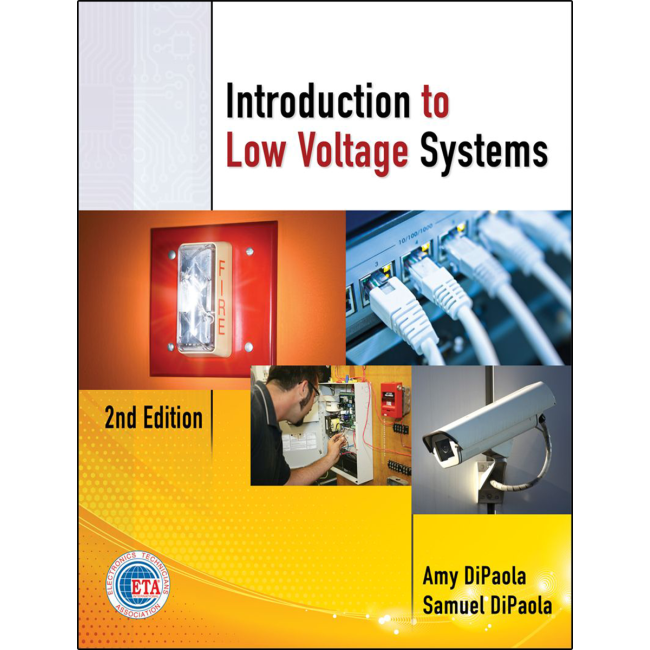

Introduction to Low Voltage Systems 2nd Ed.
Inside INTRODUCTION TO LOW VOLTAGE SYSTEMS, 2E you will discover comprehensive coverage of low voltage systems, associated devices, and the methods of the industry. All the basic elements of low voltage systems are combined into a single source to give a concrete understanding of the operation and integration of individual systems.
Plus, this edition walks you through all you need to know about devices, connection and cabling, and the National Electrical Code® in addition to the language and terminology of the industry. And, it's written especially for industry novices so difficult topics can be absorbed swiftly.
Features:
- Completely updated 2011 NEC® and NFPA 72 Fire Alarm codes references.
- All-new end-of-chapter questions.
- New chapter covering Grounding and Bonding.
- The Telecom and Security chapter is split into two separate chapters and expanded, so students can focus on each subject separately.
- Issues such as voltage drop, characteristic impedance, attenuation, and insulation are fully delineated, helping the reader select the right type of cable for a job.
- Detailed discussion of the basics of computer networking examines the levels of communication and protocols necessary for communicating across a network.
- 2011 NEC® and associated terminology are covered in-depth to enable readers to understand any manufacturer's guide.
- Textbook coverage communicates a fundamental understanding of the basic laws, components, and circuits of AC/DC electricity.
Publisher/Edition: Delmar Cengage Learning 2nd Ed.2013
ISBN 13: 9781111639532 / ISBN 10: 1111639531
| Price | $364.95 |
|---|---|
| Customer Service | Customer ServiceWe're Here To Help Call us anytime during our customer service hours... Monday through Friday - 8:30 am to 4:30 pm (Pacific) Order Questions: TOLL FREE, 800-273-7375 (Outside the U.S. call 818-887-7828). Our Address: 8001 Canoga Avenue Canoga Park, CA 91304 US Phone: 800-275-2665 E-mail: sales@buildersbook.com
|
| Description | Introduction to Low Voltage Systems by Sam DiPaola; Amy DiPaola Inside INTRODUCTION TO LOW VOLTAGE SYSTEMS, 2E you will discover comprehensive coverage of low voltage systems, associated devices, and the methods of the industry. All the basic elements of low voltage systems are combined into a single source to give a concrete understanding of the operation and integration of individual systems. Plus, this edition walks you through all you need to know about devices, connection and cabling, and the National Electrical Code® in addition to the language and terminology of the industry. And, it's written especially for industry novices so difficult topics can be absorbed swiftly. Features:
Publisher/Edition: Delmar Cengage Learning 2nd Ed.2013 ISBN 13: 9781111639532 / ISBN 10: 1111639531 |