
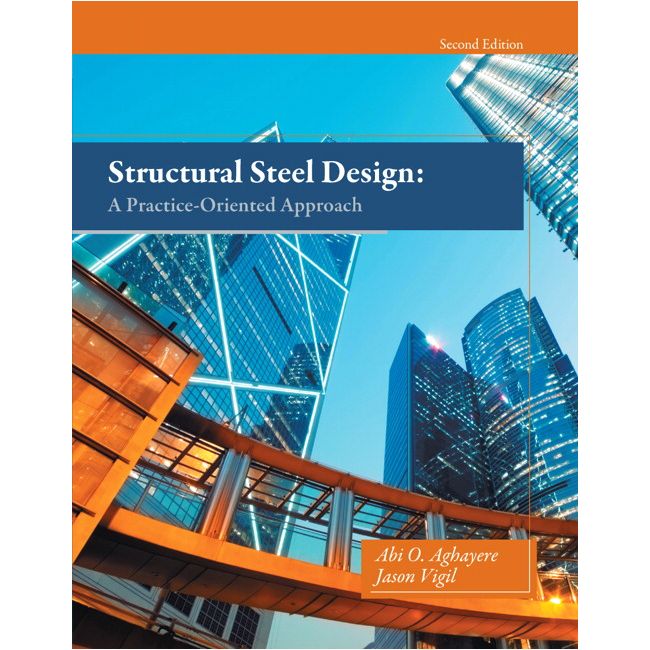

Structural Steel Design: A Practice-Oriented Approach, 2nd Edition
Structural Steel Design: A Practice-Oriented Approach, 2nd Edition
by Abi O. Aghayere, Drexel University & Jason Vigil, Consulting Engineer
For courses in Structural Steel Design and Structural Loads
Structural Steel Design: A Practice-Oriented Approach, 2e, bridges the gap between theory and practice, helping students learn the basics of steel design and how to practically apply that learning to actual steel-framed building projects.
Features
Takes a holistic approach by showing how each individual component design in a steel-framed building is incorporated into a complete building design as one would find in professional practice:
- Features realistic structural drawings and practical, real-world examples that include the use of the design aids in the AISC Manual, helping students learn how to use the AISC Manual.
- Provides comprehensive coverage of structural loads, including gravity and lateral loads, that is weaved seamlessly into the structural design process allowing for easy calculations of this somewhat complex task.
- Includes a chapter on "Practical Considerations" that provides students with a holistic design view and helps reinforce the connection between structural element/member design and building design in practice.
- Includes an introduction to floor vibration analysis and design per AISC Design Guide No. 11 as many modern buildings are more susceptible to vibration problems and most textbooks do not cover this topic.
- Other topics frequently encountered in practice but aren't covered in other texts include beam copes and their reinforcing; X-braces using tension rods/clevises/turnbuckles; stability bracing of beams and columns; and beam design for uplift loads, strengthening and rehabilitation.
Introduces a student design project as part of the end-of-the-chapter problems to expose students to the important aspects of a real-world steel building design project:
- A student steel design project at the end of Chapter 1 is followed through with future end-of-chapter problems challenging students to design different components of the building with the concepts learned in each chapter.
- At the end of the book, students will have completed the design of an entire building helping students tie the design of different building components to the design of an entire building and reinforces a holistic building design approach.
Publisher/Edition: Prentice Hall/Pearson Education/2015/ISBN NO. 133418820/9780133418828
| Price | $214.95 |
|---|---|
| Customer Service | Customer ServiceWe're Here To Help Call us anytime during our customer service hours... Monday through Friday - 8:30 am to 4:30 pm (Pacific) Order Questions: TOLL FREE, 800-273-7375 (Outside the U.S. call 818-887-7828). Our Address: 8001 Canoga Avenue Canoga Park, CA 91304 US Phone: 800-275-2665 E-mail: sales@buildersbook.com
|
| Description | Structural Steel Design: A Practice-Oriented Approach, 2nd Edition by Abi O. Aghayere, Drexel University & Jason Vigil, Consulting Engineer For courses in Structural Steel Design and Structural Loads Structural Steel Design: A Practice-Oriented Approach, 2e, bridges the gap between theory and practice, helping students learn the basics of steel design and how to practically apply that learning to actual steel-framed building projects. Features Takes a holistic approach by showing how each individual component design in a steel-framed building is incorporated into a complete building design as one would find in professional practice:
Introduces a student design project as part of the end-of-the-chapter problems to expose students to the important aspects of a real-world steel building design project:
Publisher/Edition: Prentice Hall/Pearson Education/2015/ISBN NO. 133418820/9780133418828 |