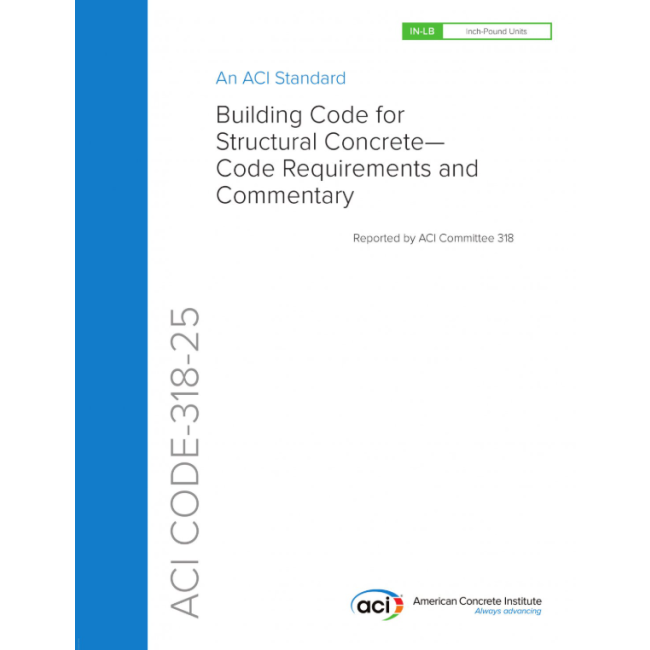

ACI CODE-318-25: Building Code for Structural Concrete—Code Requirements and Commentary (ACI CODE-318-25)
The “Building Code for Structural Concrete” (“Code”) provides minimum requirements for the materials, design, and detailing of structural concrete buildings and, where applicable, nonbuilding structures. The Code was developed using a consensus process and addresses structural systems, members, and connections, including cast-in-place, precast, shotcrete, plain, nonprestressed, and prestressed, construction. Among the subjects covered are: design and construction for strength, serviceability, and durability; load combinations, load factors, and strength reduction factors; structural analysis methods; deflection limits; mechanical and adhesive anchoring to concrete; development and splicing of reinforcement; construction document information; field inspection and testing; methods to evaluate the strength of existing structures; design verification using nonlinear response history analysis in Appendix A; performance-based wind design in Appendix B, and sustainability and resilience in Appendix C.
Uses of the Code include adoption by reference in a general building code, and earlier editions have been widely used in this manner. The Code is written in a format that allows such reference without change to its language. Commentary is provided for background information and further explanation of the code requirements. Cited references provide research data useful in studying technical issues in greater detail. Other references, provide greater insight into the code the requirements.
Keywords:
admixtures; aggregates; anchorage (structural); beam-column frame; beams (supports); caissons; cements; cold weather; columns (supports); combined stress; composite construction (concrete to concrete); compressive strength; concrete; construction documents; construction joints; continuity (structural); contraction joints; cover; curing; deep beams; deep foundations; deflections; drilled piers; earthquake-resistant structures; flexural strength; floors; footings; formwork (construction); hot weather; inspection; isolation joints; joints (junctions); joists; lightweight concretes; load tests (structural); loads (forces); mixture proportioning; modulus of elasticity; moments; piles; placing; plain concrete; precast concrete; prestressed concrete; prestressing steels; quality control; reinforced concrete; reinforcing steels; resilience; roofs; serviceability; shear strength; shotcrete; spans; splicing; strength analysis; stresses; structural analysis; structural design; structural integrity; structural walls; sustainability; T-beams; torsion; walls; water; welded wire reinforcement.
Author: ACI Committee 318
Publication Year: 2025
Pages: 702
ISBN: 9781641953092
Categories: Building Information Modeling, Codes
| Price | $334.95 |
|---|---|
| Customer Service | We're Here To Help! Call us anytime during our customer service hours... Monday through Friday - 8:30 am to 4:30 pm (Pacific) Order Questions:
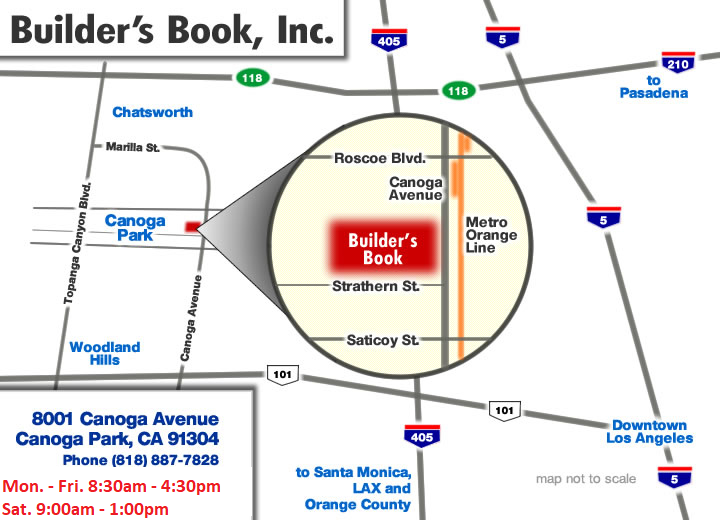
TOLL FREE, 800-273-7375 (Outside the U.S. call 818-887-7828). Our Address: 8001 Canoga Avenue Canoga Park, CA 91304 US Phone: 877-490-7158 E-mail: sales@buildersbook.com
|
| Description | The “Building Code for Structural Concrete” (“Code”) provides minimum requirements for the materials, design, and detailing of structural concrete buildings and, where applicable, nonbuilding structures. The Code was developed using a consensus process and addresses structural systems, members, and connections, including cast-in-place, precast, shotcrete, plain, nonprestressed, and prestressed, construction. Among the subjects covered are: design and construction for strength, serviceability, and durability; load combinations, load factors, and strength reduction factors; structural analysis methods; deflection limits; mechanical and adhesive anchoring to concrete; development and splicing of reinforcement; construction document information; field inspection and testing; methods to evaluate the strength of existing structures; design verification using nonlinear response history analysis in Appendix A; performance-based wind design in Appendix B, and sustainability and resilience in Appendix C.
Uses of the Code include adoption by reference in a general building code, and earlier editions have been widely used in this manner. The Code is written in a format that allows such reference without change to its language. Commentary is provided for background information and further explanation of the code requirements. Cited references provide research data useful in studying technical issues in greater detail. Other references, provide greater insight into the code the requirements.
Keywords:
admixtures; aggregates; anchorage (structural); beam-column frame; beams (supports); caissons; cements; cold weather; columns (supports); combined stress; composite construction (concrete to concrete); compressive strength; concrete; construction documents; construction joints; continuity (structural); contraction joints; cover; curing; deep beams; deep foundations; deflections; drilled piers; earthquake-resistant structures; flexural strength; floors; footings; formwork (construction); hot weather; inspection; isolation joints; joints (junctions); joists; lightweight concretes; load tests (structural); loads (forces); mixture proportioning; modulus of elasticity; moments; piles; placing; plain concrete; precast concrete; prestressed concrete; prestressing steels; quality control; reinforced concrete; reinforcing steels; resilience; roofs; serviceability; shear strength; shotcrete; spans; splicing; strength analysis; stresses; structural analysis; structural design; structural integrity; structural walls; sustainability; T-beams; torsion; walls; water; welded wire reinforcement.
Author: ACI Committee 318 Publication Year: 2025 Pages: 702 ISBN: 9781641953092 Categories: Building Information Modeling, Codes |