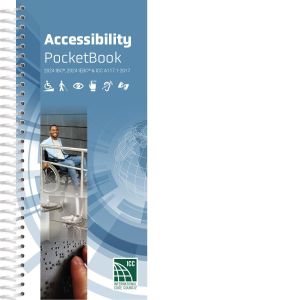
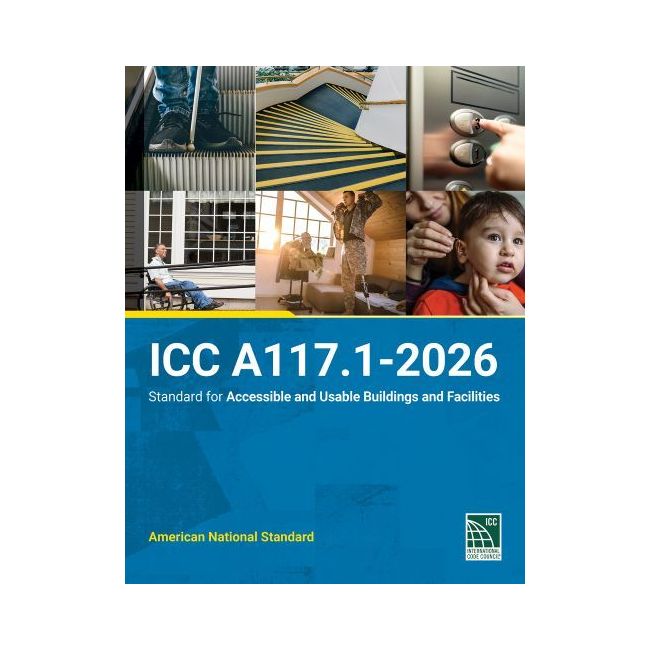

ICC A117.1-2026 Standard for Accessible and Usable Buildings and Facilities
This Standard is designed to ensure that people with physical disabilities can independently approach, enter, and use a site, facility, building, or element. Its technical criteria address a wide range of disabilities, including limited mobility, reliance on walking aids, blindness or visual impairment, deafness or hearing impairment, incoordination, limitations in reach or manipulation, reduced stamina, sensory processing challenges, and variations in body size. Through these requirements, the Standard provides a consistent framework for creating environments that are accessible, usable, and inclusive.
This updated edition continues the long-standing alignment of the Standard with ADA Accessibility Guidelines (ADAAG) and Fair Housing Design Guidelines while integrating provisions that reflect evolving technologies, community needs, and modern building practices. The result is a more comprehensive resource supporting effective, equitable accessibility in contemporary built environments.
This Standard is intended for adoption by government agencies and organizations that develop model codes, promoting uniformity in technical accessibility criteria across building codes and related regulations.
This Updated Edition covers the following:
- There are definitions for all the building blocks included in Chapter 3 of the standard, along with a new Section 301.2, that specifies where these term are used throughout the text, the criteria for that building block in Chapter 3 is required. Any references to specific sections in Chapter 3 in other chapters limits the application of that building block for that specific element.
- The questions regarding outlets over counters have been addressed for common use kitchens as well as kitchens within Accessible, Type A and Type B units. Requirements for reach over an obstruction for most outlets has been removed in favor of a minimum height or limited reach depth. This allows for kitchen design to concentrate on access to appliances, sinks and counter work surfaces.
- Elevator requirements have been coordinated and expanded to include new technologies.
- Electric vehicle (EV) charging stations have been moved to their own section and expanded to coordinate with guidance from the US Access Board.
- Contrast requirements for signage and stripes on stairways have been revised to include criteria for contrast based on a formula using light reflectance values.
- Chapter 6 has added options for clarity, new technologies and improved access. Center controls for water closets are addressed. Bathing fixtures now includes three options for accessible bathtubs, five options for accessible showers and improved information for controls and hand shower mounts. These options will increase design options and improve accessibility for bathing.
- The standard now includes provisions to address situations where people may need assistance for toileting or bathing.
- The technical criteria for assisted toileting and bathing that was in the International Building Code (IBC) has been relocated to the ICC A117.1 and expanded.
- The technical provisions for adult changing stations originally published as Supplement 1 to 2017 ICC A117.1 are included in Chapter 6. The technical criteria has been updated to reference a new safety standard for asistance tables.
- Criteria for items not previously addressed such as rinsing showers, pet washing stations, self-service check-out counters, and waste/linen chutes now have technical criteria for where they are provided.
| Price | $68.00 |
|---|---|
| Customer Service | We're Here To Help! Call us anytime during our customer service hours... Monday through Friday - 8:30 am to 4:30 pm (Pacific) Order Questions:
TOLL FREE, 800-273-7375 (Outside the U.S. call 818-887-7828). Our Address: 8001 Canoga Avenue Canoga Park, CA 91304 US Phone: 800-275-2665 E-mail: sales@buildersbook.com
|
| Description | This Standard is designed to ensure that people with physical disabilities can independently approach, enter, and use a site, facility, building, or element. Its technical criteria address a wide range of disabilities, including limited mobility, reliance on walking aids, blindness or visual impairment, deafness or hearing impairment, incoordination, limitations in reach or manipulation, reduced stamina, sensory processing challenges, and variations in body size. Through these requirements, the Standard provides a consistent framework for creating environments that are accessible, usable, and inclusive. This updated edition continues the long-standing alignment of the Standard with ADA Accessibility Guidelines (ADAAG) and Fair Housing Design Guidelines while integrating provisions that reflect evolving technologies, community needs, and modern building practices. The result is a more comprehensive resource supporting effective, equitable accessibility in contemporary built environments. This Standard is intended for adoption by government agencies and organizations that develop model codes, promoting uniformity in technical accessibility criteria across building codes and related regulations. This Updated Edition covers the following:
|