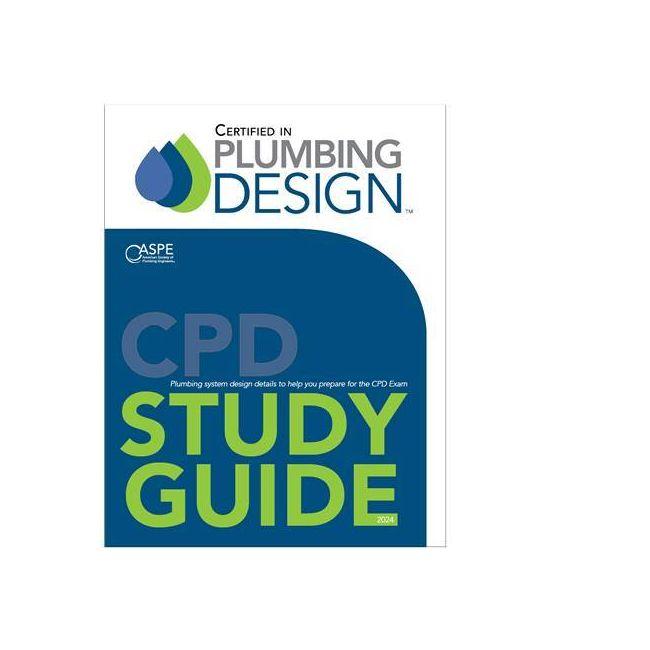

Certified Plumbing Design CPD Study Guide 2024
The CPD Study Guide is a great reference tool for any plumbing engineer in their preparation for ASPE’s Certified in Plumbing Design (CPD) exam. It contains information about the CPD exam, design details on the most common plumbing systems, and a practice exam. The CPD Study Guide does not include tips on taking the CPD Exam or provide guidance on how to pass the exam. Scroll down to view the major changes from the 2020 edition.
The 2024 edition of the CPD Study Guide includes the following major revisions vs. the 2020 edition:
- CPD Exam Task Statements and an exam breakdown were added.
- Chapter 5, references to “runoff coefficient” were changed to “Runoff Coefficient/Imperviousness Factor.”
- Page 50, Equation 6-11 was changed to p=0.000539.
- Page 68, the term “dialectric isolating joints” was changed to “dialectric isolating unions.”
- Page 103, a section on Controls was added under Pump Capacity.
- Page 116, under Flow Alarms, the following was removed: “It activates a horn on the outside of the building above the fire department connection and also sends a signal to the local fire department. The pressure type alarm senses water pressure.” The following was added: “An optional switch can be attached on the alarm line to provide an electric signal to an outdoor alarm bell and to the building’s main fire alarm control panel. The fire flow switch sending a signal to the fire alarm panel, which signals the electric fire alarm bell, is the least-maintenance, least-cost application. The building’s fire alarm panel can be annunciated at the local fire department.”
- Page 119, under Pressure, the last sentence was revised to “Propane tank pressures can range from less than 10 psig to more than 200 psig.”
- Page 126, the minimum medical gas inlet pressure was changed from 12 in. Hg to 15 in. Hg.
- Page 133, the specification methods were changed to Descriptive, Performance, Reference Standard, and Proprietary.
| Price | $99.95 |
|---|---|
| Customer Service | We're Here To Help! Call us anytime during our customer service hours... Monday through Friday - 8:30 am to 4:30 pm (Pacific) Order Questions:
TOLL FREE, 800-273-7375 (Outside the U.S. call 818-887-7828). Our Address: 8001 Canoga Avenue Canoga Park, CA 91304 US Phone: 800-275-2665 E-mail: sales@buildersbook.com
|
| Description | The CPD Study Guide is a great reference tool for any plumbing engineer in their preparation for ASPE’s Certified in Plumbing Design (CPD) exam. It contains information about the CPD exam, design details on the most common plumbing systems, and a practice exam. The CPD Study Guide does not include tips on taking the CPD Exam or provide guidance on how to pass the exam. Scroll down to view the major changes from the 2020 edition. The 2024 edition of the CPD Study Guide includes the following major revisions vs. the 2020 edition:
|