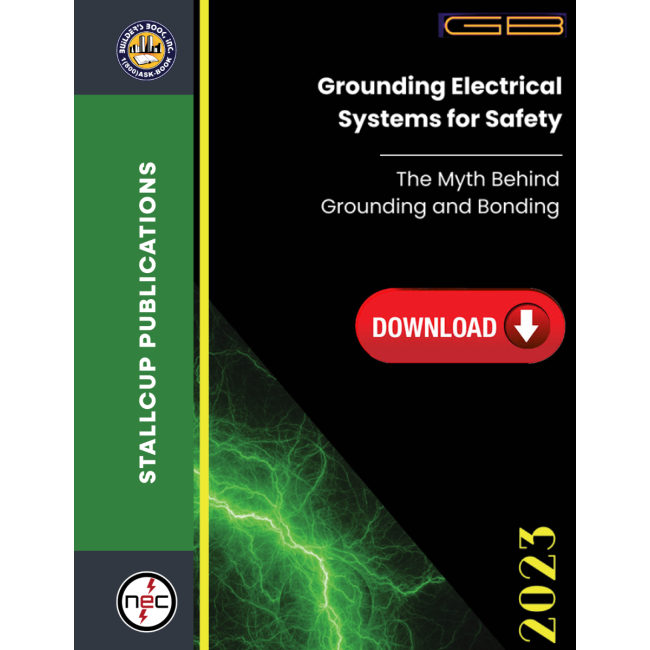

Stallcup’s Grounding Electrical Systems for Safety - DOWNLOAD
Equipment and circuits that are grounded and bonded properly are protected from lightning storms and excessive surges of voltages. Property is also protected and safety for people is provided.
This book from an expert in the field covers circuit and system grounding, equipment grounding, and bonding supply and load side.
Topics also covered are grounding and bonding of:
- Service Equipment
- Separately Derived Systems
- Separate Buildings or Structures
Table of Contents:
- General Requirements for Grounding and Bonding
- Objectionable Current Over Grounding Conductors
- Connection of Grounding and Bonding Equipment
- Protection of Ground Clamps and Fittings
- AC Systems to be Grounded
- AC Systems of 50 Volts to 1000 Volts Not Required to be Grounded
- Circuits Not to be Grounded Per 2020 NEC
- System Grounding Connections
- Calculating Fault Current
- Main Bonding Jumper
- Grounded Conductor Brought to Service Equipment
- Conductor to be Grounded - AC Systems
- Main Bonding Jumper and System Bonding Jumper
- Grounding Separately Derived AC Systems
- Buildings or Structures Supplied by a Feeder(s) or Branch Circuit(s)
- Portable, Vehicle-Mounted, and Trailer-Mounted Generators
- Impedance Grounded Systems (480 Volts to 1000 Volts)
- Grounding Electrode System
- Electrodes Permitted for Grounding
- Grounding Electrode System Installation
- Auxiliary Grounding Electrodes
- Soil Treatment
- Use of Strike Termination Devices
- Grounding Electrode Conductor Material
- Grounding Electrode Conductor Installation
- Size of Alternating Current Grounding Electrode Conductor
- Grounding Electrode Conductor and Bonding Jumper Connection to Grounding
- Electrodes
- Methods of Grounding and Bonding Conductor Connection to Electrodes
- Services
- Bonding for Communications Systems
- Bonding for Over 250 Volts
- Size - Supply-Side Bonding Jumper
- Size - Equipment Bonding Jumper on Load Side of an Overcurrent Device
- Bonding of Piping Systems and Exposed Structural Steel
- Types of Equipment Grounding Conductors
- Identification of Equipment Grounding Conductors
- Equipment Grounding Conductor Installation
- Sizing of Equipment Grounding Conductors
- Equipment Grounding Conductor Connections
- Equipment Fastened in Place or Connected by Permanent Wiring Methods (Fixed) -
- Grounding
- Cord-and-Plug Connected Equipment
- Frames of Ranges and Clothes Dryers
- Use of Grounded Circuit Conductor for Grounding Equipment
- Connecting Receptacle Grounding Terminal to Box
- Continuity and Attachment of Equipment Grounding Conductors to Boxes
- Size of the Direct-Current Grounding Electrode Conductor
- Computer Equipment Grounding Using a Spacer
- Radial Grounding
- High-Frequency Reference Grid
- Swimming Pools - Equipotential Bonding
- Swimming Pools - Grounding
- Hot Tubs, Spas, and Hydromassage Tubs
- Hydromassage Tubs
- Grounding Antenna Systems per NEC and UL
- Grounding and Bonding of Fences and Other Metal Structures
- Ground-Fault Circuit-Interrupter for Receptacles on 15 kW or Smaller Portable
- Generators
- Portable Generators 15 kW or Less
- Lightning Protection for Buildings and Structures
| Price | $59.95 |
|---|---|
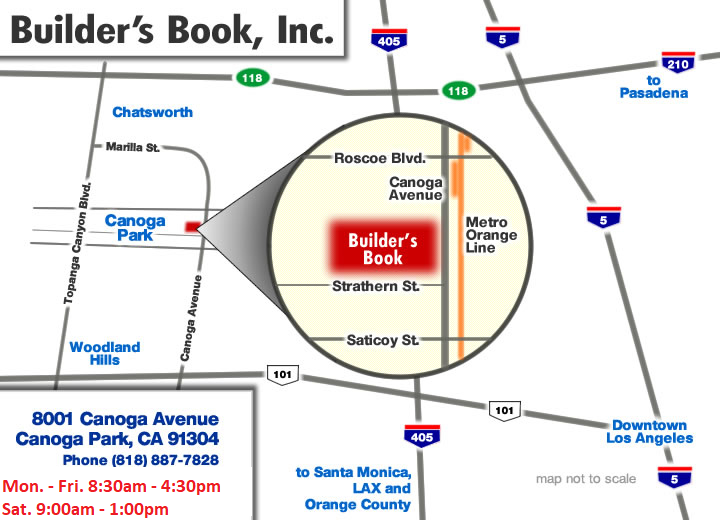
| Customer Service | We're Here To Help! Call us anytime during our customer service hours... Monday through Friday - 8:30 am to 4:30 pm (Pacific) Order Questions: TOLL FREE, 800-273-7375 (Outside the U.S. call 818-887-7828). Our Address: 8001 Canoga Avenue Canoga Park, CA 91304 US Phone: 800-275-2665 E-mail: sales@buildersbook.com
|
| Description | Equipment and circuits that are grounded and bonded properly are protected from lightning storms and excessive surges of voltages. Property is also protected and safety for people is provided. This book from an expert in the field covers circuit and system grounding, equipment grounding, and bonding supply and load side. Topics also covered are grounding and bonding of:
Table of Contents:
|